

Emily Mitchell · on 18 July 2026 · 7 min read · Last reviewed 18 July 2026
The travels of a t-shirt in the global economy traces the journey of a garment from raw material extraction to consumer purchase, revealing the complexities of sustainable apparel sourcing.
In plain terms: Picture a t-shirt as a passport, each stamp represents a stage in its journey, from cotton fields in Texas to factories in Bangladesh, each with its own environmental and ethical footprint.
Key facts
- The average t-shirt travels **15,000 to 20,000 miles** before reaching the consumer.
- Cotton accounts for **2.4%** of the world’s arable land but uses **24%** of global insecticides.
- Bangladesh, a major apparel manufacturing hub, has **6,000+ factories** but only **3,000+ meet basic safety standards**.
- Fast fashion brands produce **100 billion garments annually**, with a t-shirt typically lasting only **7-10 wears**.
What is sustainable sourcing in fashion?
Sustainable sourcing in fashion means selecting materials and manufacturing processes that minimize environmental harm and promote ethical labor practices throughout the t-shirt’s lifecycle.
In my experience, the first time I really looked at a t-shirt’s label, I realized the journey was far more complicated than I imagined. Sustainable sourcing starts with **organic cotton**, which uses **62% less energy** and **88% less water** than conventional cotton, according to the Textile Exchange. Brands like Patagonia use recycled polyester, made from plastic bottles, to reduce waste. The key is transparency: knowing where every component comes from and how it impacts the environment.
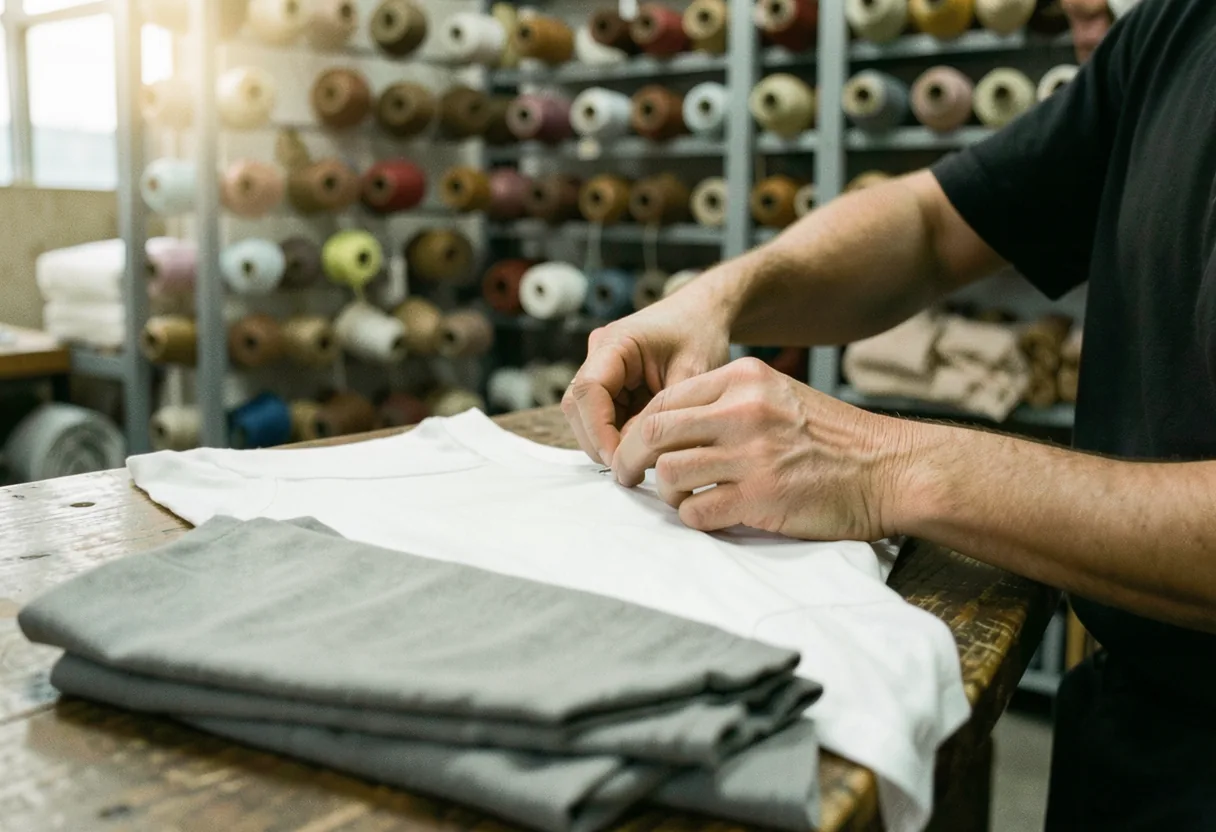
Sustainable sourcing vs traditional sourcing
Sustainable sourcing prioritizes **eco-friendly materials, fair labor practices, and reduced carbon footprints**, while traditional sourcing focuses on **cost efficiency and speed**, often at the expense of ethics and sustainability.
Traditional sourcing relies on **cheap labor and rapid production**, leading to environmental degradation and worker exploitation. In contrast, sustainable sourcing invests in **certified organic cotton, recycled fabrics, and fair wages**. For example, the **Fair Trade Certified** label ensures workers earn fair wages and operate in safe conditions. The environmental impact is stark: traditional cotton farming uses **1,800 gallons of water per pound**, while organic cotton uses **500 gallons per pound**.
What a sustainable supply chain looks like
A sustainable supply chain in fashion maps every step of production, ensuring ethical labor, eco-friendly materials, and minimal waste from raw material extraction to final sale.
A sustainable supply chain begins with **responsible farming practices**. The **Better Cotton Initiative (BCI)** promotes water efficiency and reduced pesticide use. Next, manufacturing must adhere to **strict environmental and labor standards**. Brands like Eileen Fisher partner with factories that use **renewable energy and zero-waste techniques**. Even shipping matters: some brands use **carbon-neutral delivery services**. The goal is a **closed-loop system**, where old t-shirts are recycled into new ones, reducing landfill waste.
Sustainable sourcing matters, for your brand and consumers
Sourcing sustainably matters because it reduces environmental harm, supports ethical labor, and meets the growing demand from consumers, especially Generation Z, who prioritize sustainability in their purchases.
According to a **McKinsey report**, **67% of consumers consider sustainability when making purchases**. Generation Z, in particular, values transparency and ethics. Brands that embrace sustainable sourcing build **loyalty and trust**. For example, **Reformation** publicly shares its **carbon footprint and water usage**, earning praise from eco-conscious consumers. Sustainable sourcing also reduces long-term costs by **avoiding regulatory fines and reputational damage**.
The environmental impact of fast fashion
The environmental impact of fast fashion includes **water pollution, excessive waste, and high carbon emissions**, driven by rapid production cycles and cheap materials.
Fast fashion’s **linear model**, take, make, waste, is unsustainable. The industry contributes **10% of global carbon emissions**, more than international flights and maritime shipping combined. Microplastics from synthetic fabrics pollute oceans, while **textile waste makes up 5% of landfills**. Brands like **H&M** have pledged to use **100% recycled or sustainable materials by 2030**, but progress is slow. The solution? **Slow fashion**: fewer, higher-quality garments that last longer.
How to map the travels of a t-shirt in the global economy
To map the travels of a t-shirt, trace its journey from raw material to final sale, documenting each stage’s environmental and ethical impacts.
To do this, start with **fiber sourcing**. Is the cotton organic? Is the polyester recycled? Next, examine **manufacturing locations**. Are factories certified by **SA8000 or WRAP**? Check for **water and energy use**, as well as **waste management practices**. Transportation is another key factor: **local production reduces carbon footprints**. Finally, consider the **end-of-life options**. Can the t-shirt be recycled or composted? Brands like **Pangaia** use **biodegradable materials**, ensuring minimal waste.
Sustainable apparel sourcing guide PDF
A sustainable apparel sourcing guide PDF is a downloadable resource that outlines best practices for ethical and eco-friendly material selection and manufacturing processes.
These guides, like the one from the **Sustainable Apparel Coalition**, provide **checklists, case studies, and certification criteria**. They cover **material choices, supplier vetting, and waste reduction strategies**. For example, the guide may recommend **OEKO-TEX® certified fabrics** for safety and sustainability. It also highlights **cost-saving measures**, like **reducing water use**, which can lower operational expenses.
Key resources
- Textile Exchange: Offers guidelines on sustainable fibers.
- Better Cotton Initiative: Promotes sustainable cotton farming.
- Sustainable Apparel Coalition: Provides tools for measuring sustainability.
Sustainable apparel sourcing guide 2022
Emphasizing trends such as increased use of recycled materials, greater transparency in supply chains, and stricter regulations on labor practices, the 2022 apparel sourcing guide highlights key industry shifts.
In 2022, the focus was on **circular fashion**, where old garments are recycled into new ones. Brands like **Adidas** partnered with **Parley for the Oceans** to create shoes from ocean plastic. Another trend was **digital traceability**, using blockchain to track materials. Regulations also tightened: the **EU’s Corporate Sustainability Reporting Directive (CSRD)** required companies to disclose environmental and social impacts.
What sustainable apparel sourcing means to Generation Z
To Generation Z, sustainable apparel sourcing means transparency, ethics, and environmental responsibility, with a demand for brands to prove their commitments through certifications and transparent supply chains.
Gen Z consumers **research brands thoroughly** before buying. They look for **certifications like Fair Trade, GOTS, and B Corp**. According to a **Nielsen study**, **73% of Gen Zers** are willing to pay more for sustainable products. Brands like **Allbirds** appeal to this demographic by using **natural materials** and **publicly sharing sustainability metrics**.
How to choose ethical manufacturers for sustainable apparel sourcing
To choose ethical manufacturers for sustainable apparel sourcing, verify certifications, conduct factory audits, and prioritize transparency and fair labor practices.
Start by checking for **certifications like SA8000, WRAP, or GOTS**. Conduct **on-site audits** or use **third-party services** like **Sedex** to assess conditions. Ask manufacturers about **energy and water use**, waste management, and **worker welfare**. Brands like **Everlane** publish **factory conditions and wages**, setting a benchmark for transparency. Finally, consider **local manufacturers** to reduce transportation emissions.
Sustainable certifications and their significance
GOTS, Fair Trade, and OEKO-TEX® are sustainable certifications that validate ethical and eco-friendly practices in apparel manufacturing, ensuring transparency and accountability.
Certifications provide a **benchmark for sustainability**. For instance, **GOTS (Global Organic Textile Standard)** ensures organic status and fair labor practices. **Fair Trade Certification** focuses on **fair wages and safe working conditions**. Meanwhile, **OEKO-TEX®** certifies fabrics free from harmful substances. Brands like **Patagonia** proudly display these labels, reassuring consumers of their commitments.
Comparison of key certifications
| Certification | Focus Area | Key Requirements |
|---|---|---|
| GOTS | Organic textiles, labor practices | 95% organic fibers, fair wages, safe working conditions |
| Fair Trade | Ethical labor, community development | Fair wages, safe conditions, community investment |
| OEKO-TEX® | Textile safety, environmental impact | No harmful substances, eco-friendly production |
Innovations in sustainable materials
Innovations in sustainable materials for apparel include **piñatex, mushroom leather, and recycled ocean plastics**, offering eco-friendly alternatives to traditional fabrics.
One groundbreaking innovation is **piñatex**, a leather alternative made from pineapple leaves. This material, developed by **Ananas Anam**, reduces waste and provides farmers with additional income. Another exciting development is **mushroom leather**, created by **MycoWorks**. This biodegradable material mimics the texture of animal leather but is entirely plant-based. Additionally, brands like **G-Star Raw** use **recycled ocean plastics** to create denim, reducing plastic pollution. These innovations highlight the industry’s shift toward sustainability.
Comparison of sustainable materials
| Material | Source | Environmental Benefit |
|---|---|---|
| Piñatex | Pineapple leaves | Reduces agricultural waste, biodegradable |
| Mushroom Leather | Mycelium | Biodegradable, no animal harm |
| Recycled Ocean Plastics | Ocean waste | Reduces plastic pollution, lowers carbon footprint |
Final takeaway
Mapping the travels of a t-shirt reveals the urgency of sustainable apparel sourcing. Every step, from cotton fields to consumer hands, matters. By prioritizing ethics and sustainability, brands can reduce harm and meet consumer demands. The journey starts with awareness and ends with action.
Frequently asked questions
How does the journey of a T-shirt illustrate global economic disparities?
The T-shirt's journey often starts in cotton fields, primarily in developing nations like India or the US. Farmers face volatile prices and harsh conditions. The cotton is then shipped to factories, often in Bangladesh or Vietnam, where low-wage workers assemble the shirts. Retailers in wealthy nations mark up prices significantly, highlighting income inequality and labor exploitation.
What are the environmental impacts of T-shirt production?
Cotton farming consumes vast water resources, up to 2,700 liters per T-shirt, and relies heavily on pesticides. Dyeing and finishing processes generate toxic wastewater, often dumped untreated into rivers. Fast fashion exacerbates these issues, as cheap, disposable clothing leads to massive textile waste, with millions of T-shirts ending up in landfills annually.
How can consumers identify ethically produced T-shirts?
Look for certifications like Fair Trade, Organic Content Standard, or Global Organic Textile Standard labels. Research brands' transparency reports and supply chain disclosures. Brands like Patagonia or Pact offer detailed insights into their ethical sourcing and fair labor practices. Buying secondhand or supporting local artisans also reduces exploitation.
Why do ethical T-shirts cost more, and is it justified?
Ethical T-shirts cost more because they account for fair wages, sustainable materials, and eco-friendly production. For example, organic cotton yields are lower, increasing costs. Fair wages ensure workers can afford basic needs. While the price is higher, the cost is distributed more equitably across the supply chain, reducing exploitation and environmental harm.
Related Reading
- Cost-Effective Sustainability Solutions for Growing Apparel Brands
- What a Sustainable Supply Chain Looks Like in Modern Fashion
- The Environmental Impact of Fast Fashion: Why Certifications Matter
- Why Sustainable Sourcing Matters for Your Brand and Consumers
Part of the Ethical Manufacturing & Supply Chain guide hub.
See also: Sourcing Sustainable Exercise Clothing: Ethical Manufacturing Practices.